
Wood Fence Care • October 2026
How to Maintain and Stain a Pressure-Treated Wood Fence in North Alabama
A pressure-treated wood fence needs routine care to keep it looking good and working well. Rain, summer sun, humidity and changing seasons all affect exposed wood. Cleaning, timely repairs and a suitable exterior finish can help protect your investment.
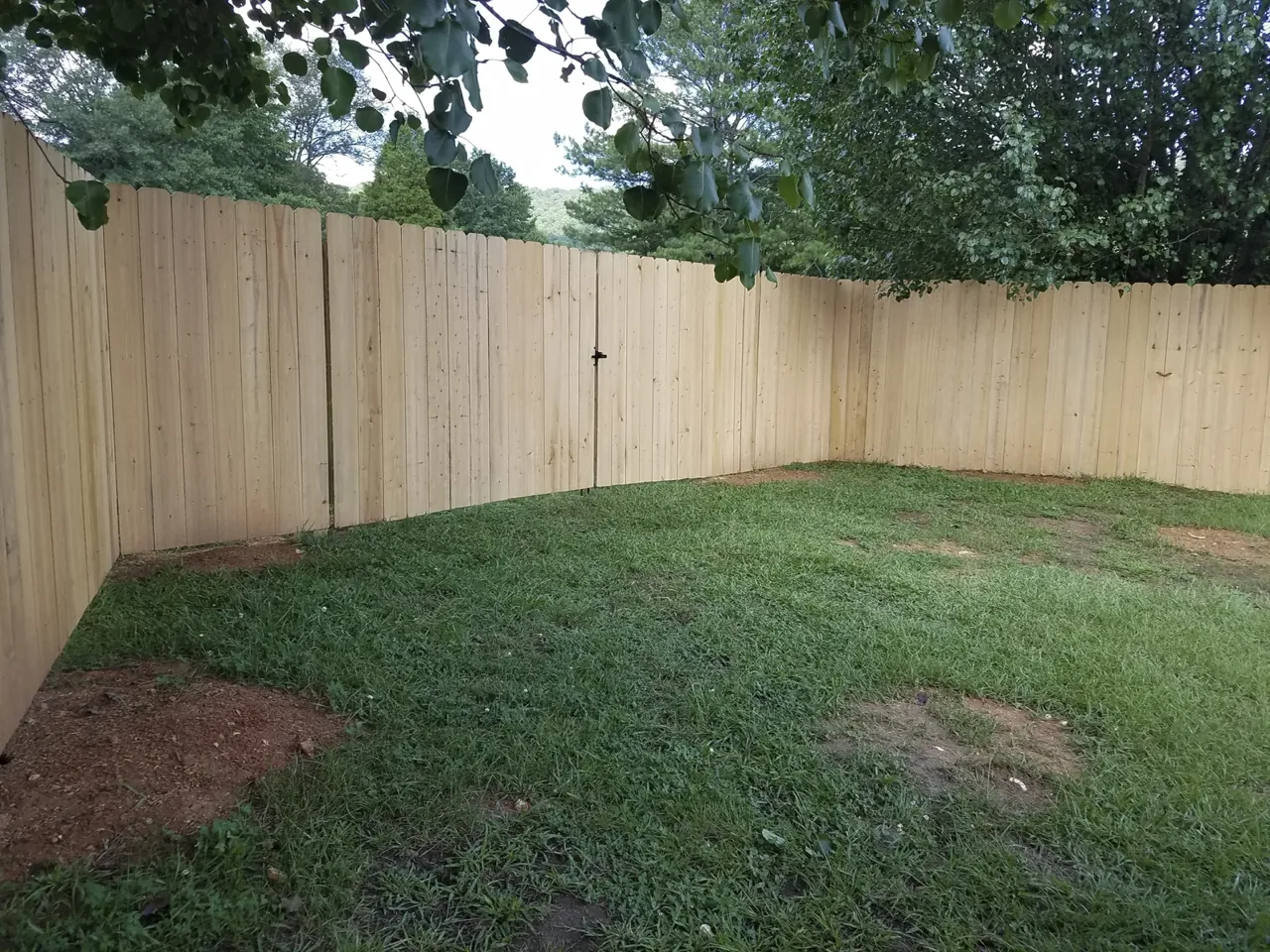
Pressure treatment and staining serve different purposes
Pressure treatment helps wood resist decay and insect damage. An exterior stain or water-repellent finish helps manage weathering and appearance. Treatment alone does not keep a fence from fading, absorbing water or developing surface checks as it dries.
Check that the wood is ready before staining
Freshly installed pressure-treated lumber may still contain substantial moisture. Avoid choosing a staining date solely by counting weeks after installation: drying depends on the lumber, sunlight, humidity and recent rain.
YellaWood recommends a simple water-drop check: if water beads on the surface, wait; if it absorbs, the surface may be ready. Check several boards, including shaded areas. Follow your chosen stain’s preparation and moisture requirements, using a moisture meter when the instructions call for one.
Some lumber is kiln dried after treatment and may be ready sooner. Other products take longer. The finish manufacturer’s directions should guide your decision.
Clean the fence and inspect it for repairs
Remove leaves, dirt and vegetation around the fence. Inspect loose pickets, rails, fasteners, gate hardware and posts. Repair damaged sections before applying a finish; stain cannot fix a leaning post or weakened rail.
Use a cleaner intended for exterior wood and compatible with your stain. Follow its directions, protect surrounding plants and surfaces, and rinse thoroughly. Use care with pressure washing: excessive pressure or holding the nozzle too close can scar wood and raise its fibers. Let the fence dry again after cleaning.
If an old coating is peeling or incompatible with the new finish, follow the manufacturer’s removal and preparation instructions. Smooth splintered areas as needed and remove sanding dust.
Choose a finish made for exterior wood
Look for a product labeled for fences and pressure-treated lumber. Clear finishes show the wood’s natural appearance; tinted stains add color. Semi-transparent stains let the grain show, while solid-color products provide more coverage. Check the product’s weathering protection, maintenance requirements and compatibility with any existing finish.
Test a small, inconspicuous area first. The same stain color can look different on new boards, weathered boards and repaired sections. Buy enough product for the fence’s actual surface area, including both sides if you plan to coat both.
Apply stain in suitable weather
Check the forecast and the label’s requirements for temperature, rain-free time and drying. North Alabama humidity and shaded fence sections can slow drying. Follow any instructions about direct sunlight and hot surfaces.
Protect nearby vehicles, siding, plants and neighboring property from overspray. Apply the specified amount and number of coats with the approved tools. Work in manageable sections and follow the label’s directions for brushing or back-brushing. Pay attention to board edges and exposed end grain.
Follow all label instructions for protective equipment, cleanup and disposal, including handling oil-soaked rags.
Make maintenance a regular habit
- Inspect the fence at least annually and after severe storms.
- Keep soil, mulch and stored materials from piling against wood.
- Trim vegetation so you can inspect the fence and allow airflow.
- Adjust sprinklers that repeatedly soak the same section.
- Check gate alignment, hinges and latches, and repair loose boards promptly.
Restaining frequency depends on the product, exposure and condition of the existing finish. Inspect for fading, uneven wear and increased water absorption, then use the stain manufacturer’s maintenance guidance. A sunny section may need attention before a sheltered section.
Common mistakes to avoid
Staining damp or dirty wood, skipping repairs, applying too much product, and coating an incompatible old finish can all lead to disappointing results. Good preparation matters as much as the color you choose.
Need help with your wood fence?
Hooks Fence Company installs wood privacy fences and provides fence repair in Boaz and surrounding North Alabama communities. If your fence needs structural repairs or replacement, call 256-558-1184 or request an estimate.
Manufacturer guidance
For preparation details, see YellaWood’s guidance on staining pressure-treated wood. Always follow the instructions on the particular cleaner and stain you use.