
Leaning or Damaged Posts
Posts can fail from impact, soil movement, rot, corrosion or storm damage. The surrounding fence determines whether replacing individual posts is practical.
Repair • Replace • Restore Function
Hooks Fence Company provides chain-link fence repair in Boaz and nearby communities, along with repairs to other fence materials and gates. Storm damage, fallen trees, leaning posts, damaged fabric, broken gates and aging fence sections do not always require a complete new fence. Hooks Fence Company can evaluate whether repair, partial replacement or full replacement makes the most sense.
Repair or Replace?
A practical repair should restore the fence without putting new material onto a system that is already failing everywhere else. We look at the damaged area, post condition, remaining fence, gate operation and material availability before recommending the next step.
Posts can fail from impact, soil movement, rot, corrosion or storm damage. The surrounding fence determines whether replacing individual posts is practical.
Chain-link fabric, wood sections, vinyl components and other fence materials may sometimes be repaired or replaced without rebuilding the entire perimeter.
Dragging, sagging, bent or damaged gates can involve the frame, hinges, latch, posts or the ground beneath the opening. Correcting the cause matters more than simply adjusting the latch.
Fallen limbs and trees can bend posts, stretch chain-link fabric and damage rails or panels. We can evaluate the affected run and determine what can reasonably be salvaged.
Susan Moore / Blountsville Area
This Northeast Alabama repair project involved chain-link fencing damaged by a fallen tree. Tree damage can affect more than the obvious section: posts may bend, top rail can deform and fabric can stretch or lose tension.
The right repair starts by identifying which components are still sound and which need replacement so the repaired section ties back into the existing fence correctly.
Read the project story and repair details.
Ask About a Damaged Fence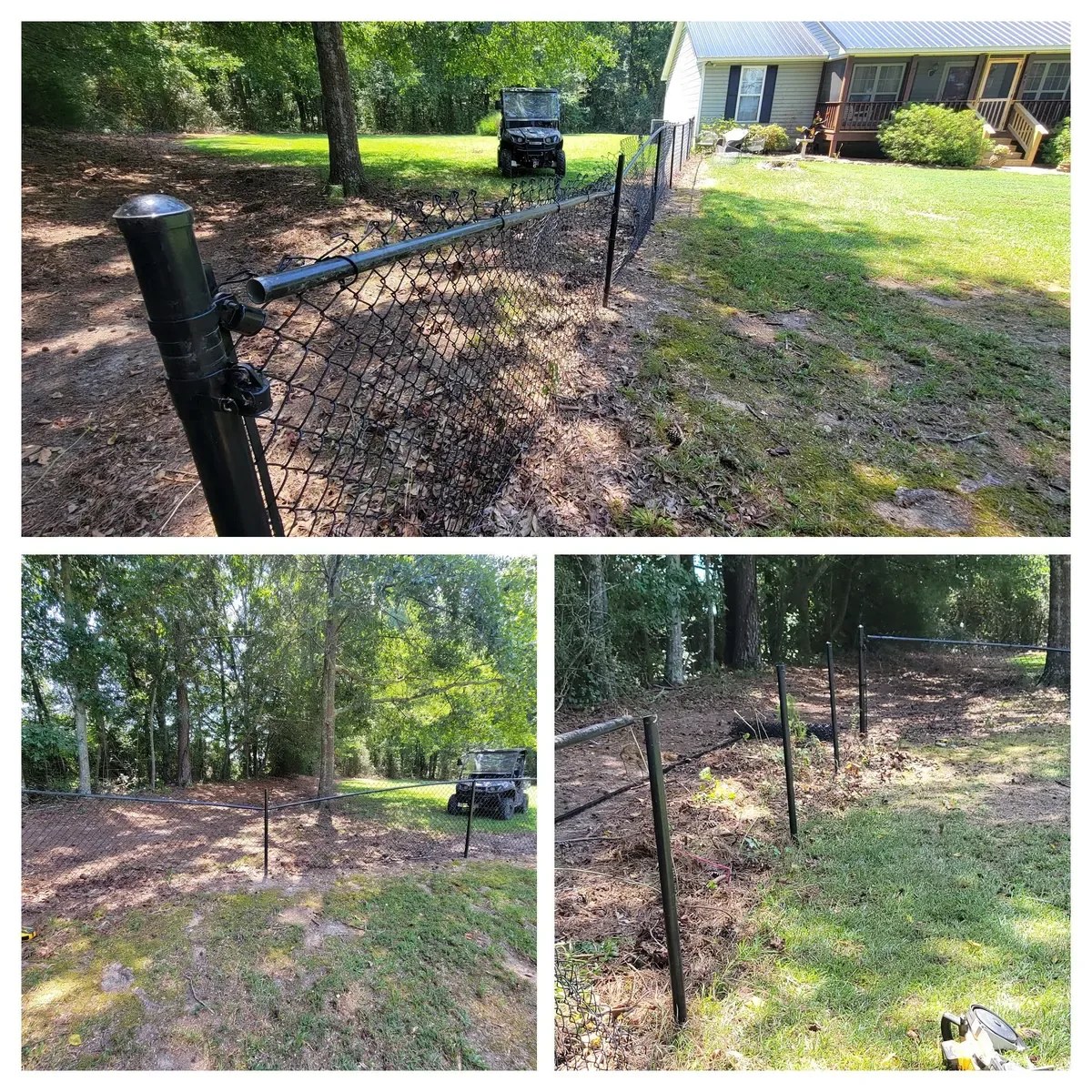
Completed Repair
When enough of the original fence remains structurally sound, targeted repair can be more practical than full replacement. The goal is not simply to make the damaged spot look better—it is to restore tension, alignment and usable function.
If the surrounding fence is severely deteriorated, repeatedly failing or no longer suitable for the property, replacement may offer better long-term value.
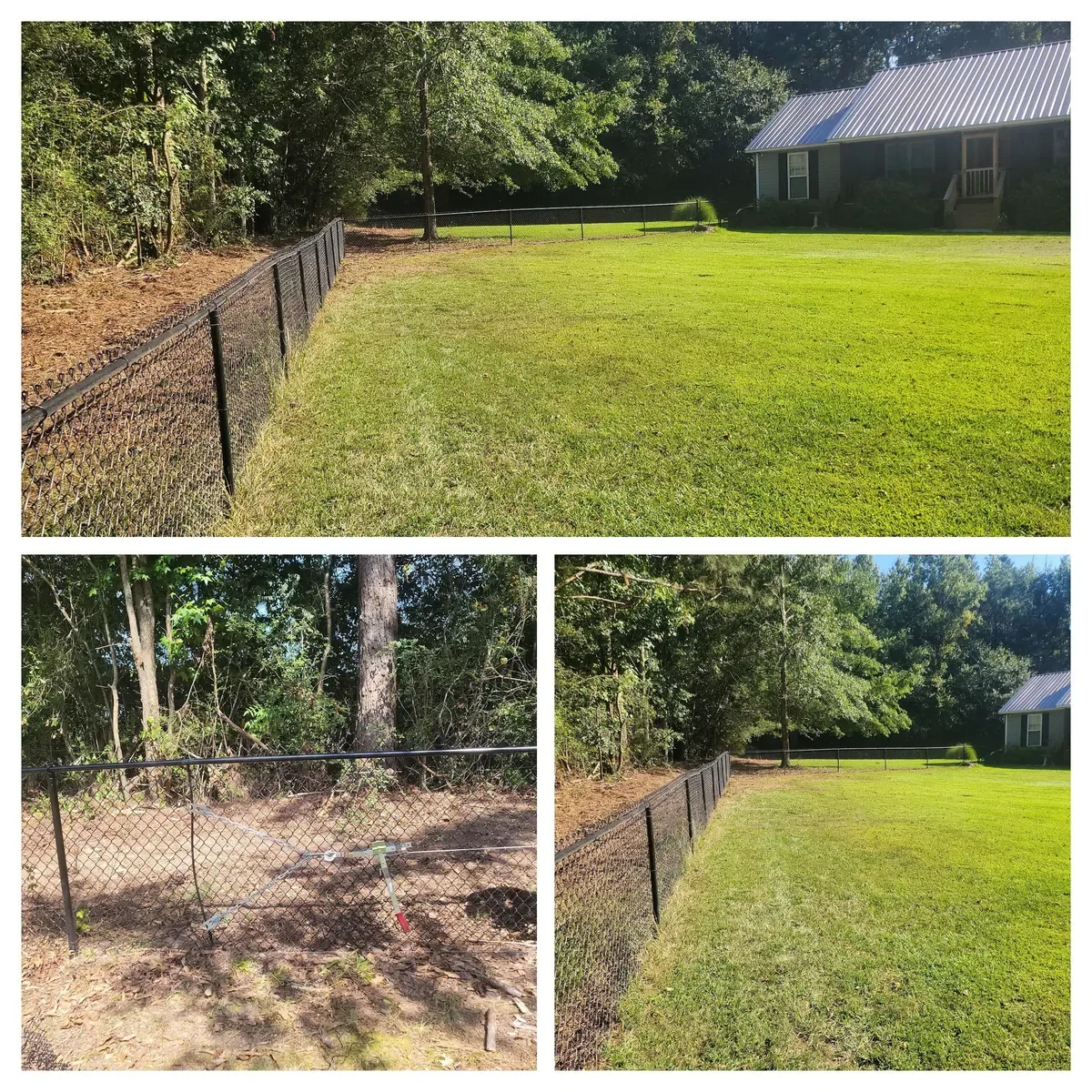
Decision Guide
Repair is often worth considering when damage is limited to a section of otherwise serviceable fence, when replacement parts can be matched reasonably well, or when a gate or post problem can be corrected without rebuilding the entire system.
Replacement becomes more attractive when multiple posts are failing, extensive sections are deteriorated, the fence no longer meets the property's needs, or repairing one area would only postpone widespread failure.
Fallen tree or storm damage
Leaning or bent fence posts
Damaged chain-link fabric or rails
Broken or sagging gates
Wood sections with localized damage
Partial fence replacement
Materials
Repairs may involve fabric, tension components, top rail, posts or gates. Damage from trees and vehicles can travel farther along the fence than it first appears.
Individual boards or sections can sometimes be replaced, but post condition and the age of surrounding lumber determine whether a localized repair will hold up.
Manufactured components may depend on matching the existing profile, style and availability. We can assess whether compatible replacement parts are practical.
Repair may involve posts, wire tension, damaged mesh or gate access. Terrain and livestock or wildlife pressure can affect the best repair approach.
How Repair Work Is Evaluated
A repair should correct the problem that caused the failure—not just cover the visible damage. We look at the damaged component, the condition of nearby posts and rails, gate alignment, fence tension, terrain and the age of the surrounding fence before deciding what should be repaired or replaced.
We determine whether the problem is limited to fabric, boards, rails, hardware or a gate—or whether posts and supporting components are also affected.
A new section needs sound material to tie into. If nearby posts or sections are already failing, that changes the repair plan.
When a localized repair is practical, damaged components can be removed and replaced while preserving the serviceable parts of the existing fence.
The finished repair should restore the fence line, tension and gate operation—not simply make the damaged area look better from a distance.
Common Repair Work
Tree or impact damage can bend posts, top rail and gate frames while stretching or tearing chain-link fabric. Repairs may involve replacing individual structural components and re-tensioning the repaired run.
Localized wood repairs can involve damaged boards, rails, sections or posts. The age and condition of the surrounding lumber matters because new material still depends on the existing structure around it.
A gate that drags, sags or will not latch may have a frame, hinge, post or grade problem. Large or repeatedly failing gates may benefit from a stronger replacement frame rather than repeated adjustment.
When one run or section is beyond reasonable repair but the rest of the fence is still serviceable, partial replacement can restore the damaged area without automatically replacing the entire perimeter.
Help Us Understand the Damage
If you are not sure whether a fence can be repaired, a photo can help with the first conversation. Include the fence material, approximate damaged length, what caused the damage and whether any gate or post is affected.
The Free Estimate form on our homepage accepts an optional project photo, so you can show us the damaged area before we discuss the next step.
Fence material and approximate height
Approximate length of the damaged area
Tree, storm, vehicle or age-related damage
Whether posts, rails or gates are affected
One clear photo of the damaged section
Questions
Often, yes, if the rest of the fence is still in serviceable condition and compatible materials are available. The damaged section and surrounding posts need to be evaluated together.
Not necessarily. Localized damage may be repairable. If damage is widespread or the existing fence is already near the end of its useful life, replacement may make more sense.
Sometimes. Gate problems can come from the gate frame, hinges, latch, supporting posts or changes in grade. The cause determines whether adjustment, component replacement or a new gate is appropriate.
It helps to know the fence material, approximate damaged length, what caused the damage and whether gates or posts are affected. Photos can also make the initial conversation more useful.
Tree damage can often be localized, but the posts, top rail and fabric around the impact need to be checked together. Our Susan Moore / Blountsville project is an example of repairing a damaged chain-link run rather than replacing the entire fence.
Yes. The Free Estimate form on our homepage includes an optional project-photo upload. A clear photo plus the fence type and approximate damaged length can make the initial conversation more useful.
Customer Experience • Replacement Work
“Love our new fence! Did a great job tearing down and hauling off the old one and put up the new one in two days! Beautiful!”
Request an Estimate
Call Hooks Fence Company and describe what happened, the fence material and the approximate damaged area. We can help determine the next practical step.
Planning your project? See what affects a fence estimate and compare fence materials.