October 31, 2026 • Rural Fence Planning
Planning a Woven-Wire Fence for Rural Property in North Alabama
Planning a woven-wire fence for acreage starts with its purpose, terrain, corners and equipment gates—not footage alone.
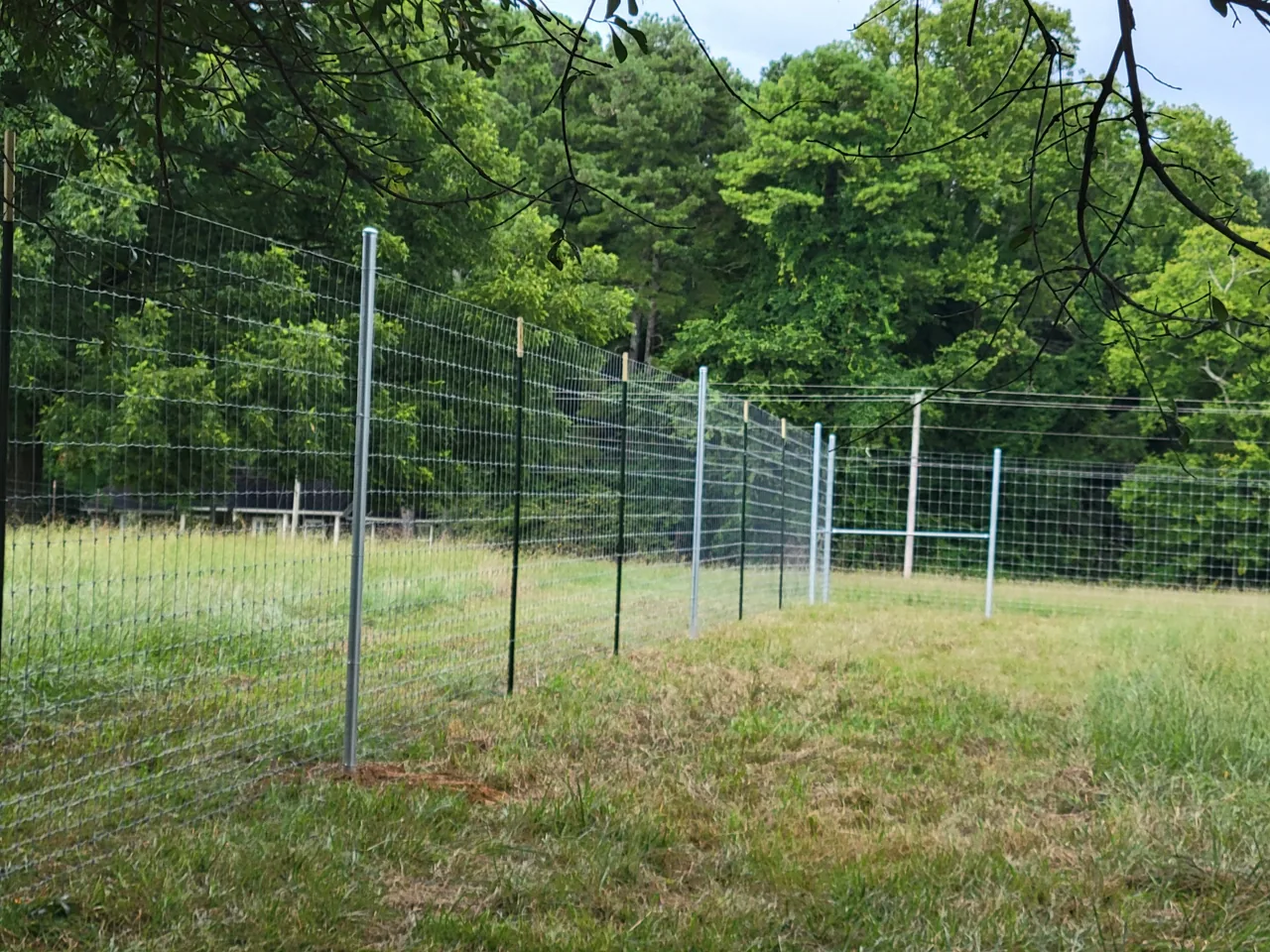
Long rural fence lines can look simple on a map. On the property, the planned route may cross slopes, wooded areas, drainage paths and equipment entrances. Those conditions can affect where the fence should run and how corners, ends and gates need to be planned.
Before requesting an estimate for woven-wire fencing in Boaz, Sardis, Guntersville or another North Alabama community, start by answering one basic question: What does the fence need to contain or keep out?
Match the wire system to the purpose
A garden protected from deer, a pasture boundary and a smaller animal enclosure do not automatically need the same fence. The intended use can affect fence height, wire openings, strength, ground-level spacing and gate design.
Tell the fence contractor which animals are involved and whether their size or behavior may change. A young animal may interact with wire openings differently from a larger adult. Wildlife exclusion also requires different planning from livestock containment.
No fence should be described as escape-proof. The practical goal is to select and install a system that fits the animals, land and intended use, followed by regular inspection and maintenance.
Walk the proposed route before settling on the layout
Look beyond the shortest line between two points. Walk the route and note:
- steep or changing grades;
- low areas where water crosses the property;
- trees, brush and fallen-limb risks;
- rocky or soft ground;
- existing fence that may need removal;
- areas that are difficult for installation equipment to reach; and
- property corners and boundary questions.
Changing the route slightly may sometimes improve access or avoid a troublesome area, but property boundaries should be confirmed before installation. Photographs are helpful for the first conversation, while the final plan must reflect the actual site.
Corners and ends do more work than they appear to
Woven wire is installed under tension. Corners, ends and gate openings help support that tension, so they are not merely places where the fence changes direction or stops.
Long runs, multiple turns and changes in grade can influence the support plan. The appropriate posts, bracing and spacing depend on the selected fence system and site conditions. This is one reason a rural fence estimate should account for more than a simple price per foot.
Plan gates for the equipment that must pass through
A rural gate should be planned around actual use. Consider the widest tractor, mower, trailer, delivery vehicle or maintenance equipment that may need access—not just the vehicle used most often today.
The approach angle matters as well as the opening width. A trailer turning from a narrow lane may need more usable clearance than a vehicle approaching straight ahead. Also consider the gate's swing path, nearby slopes and space for a vehicle to wait safely.
Learn more about custom and equipment gate planning.
Check the bottom of the fence and drainage areas
Ground clearance can change along slopes, dips and drainage channels. These areas deserve attention during layout planning and later inspections.
Avoid treating an active drainage path as if it were level, permanent ground. Water movement can collect debris, expose soil or create new openings beneath a fence. The right approach depends on the specific site and fence purpose.
Leave room for inspection and maintenance
Vegetation can hide loose wire, fallen branches, damaged posts and ground-level openings. After installation, walk the fence periodically and after severe weather. Pay particular attention to:
- corners and end assemblies;
- gates, latches and hinge posts;
- wooded sections;
- drainage crossings;
- areas where animals repeatedly contact the fence; and
- places where soil has washed away or built up.
Early attention to a localized problem may prevent a larger repair. Visit our fence repair page for the information that helps us evaluate damaged fencing.
What to send when requesting an estimate
You do not need perfect measurements to begin. Helpful information includes:
- the project location;
- what the fence needs to contain or exclude;
- approximate footage and desired height;
- the number and approximate size of gates;
- photographs of slopes, woods, drainage areas and existing fencing;
- known clearing or removal needs; and
- the largest equipment that needs access.
See the actual Sardis installation and learn more about deer and agricultural fencing. Property owners near the project can also visit our Sardis fence installation page.
Request a rural fencing estimate
Hooks Fence Company is based in Boaz, Alabama, and installs agricultural, deer and rural-property fencing across Northeast Alabama.
Call 256-558-1184 or send your project details and a photograph to start the estimate conversation.